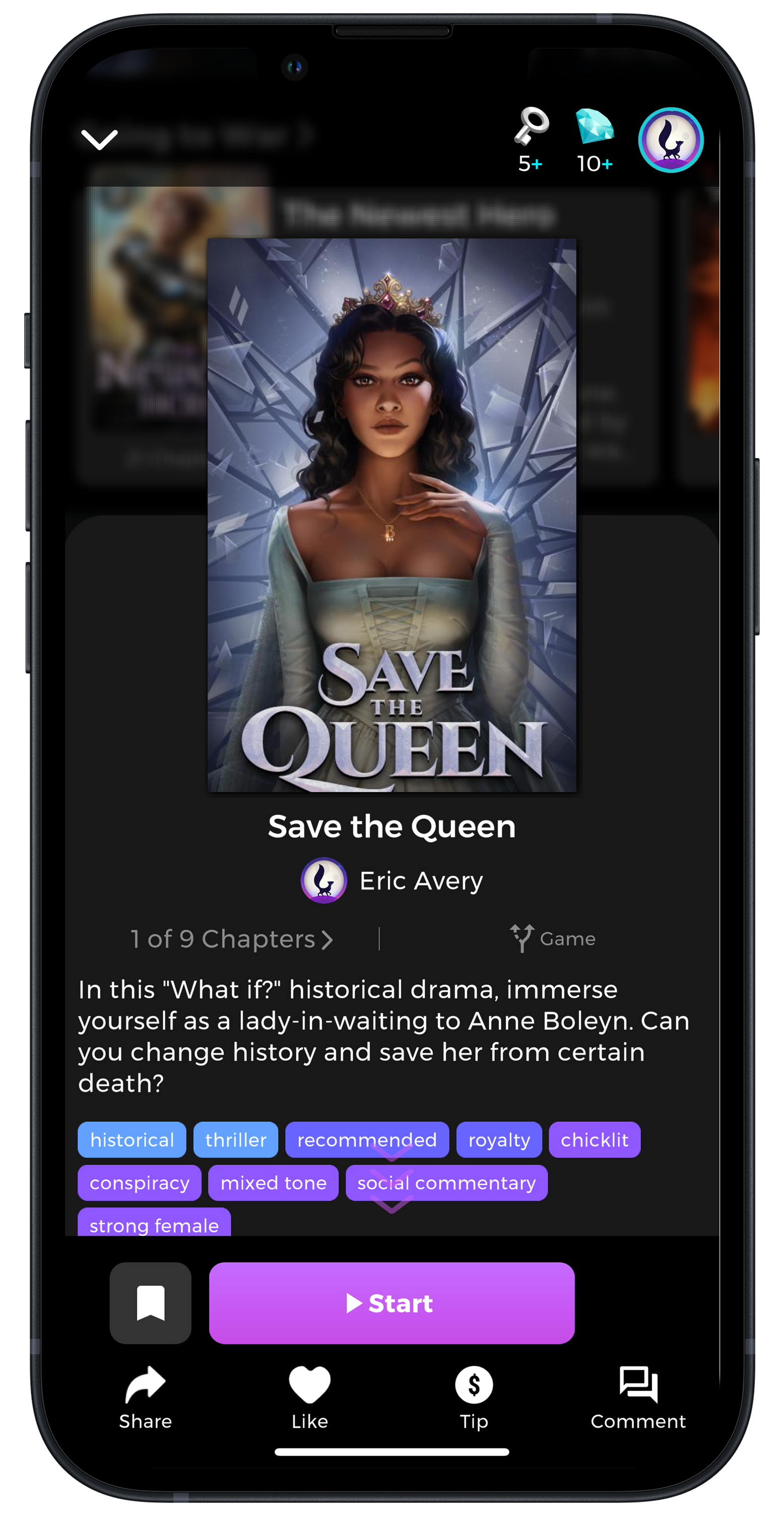
Prose Meets
Systems Design
A Case Study on Interactive Storytelling
THE CHALLENGE
FableLabs was looking for a hit.
Interactive visual novels were an emerging market, and players had high expectations: stories that felt personal, choices that felt meaningful, and an experience that kept them coming back episode after episode. When my pitch for a multi-episode historical fiction series was greenlit, the real question wasn't whether the story was good enough.
My years in game development had given me an unrealized privilege: the ability to tell a story the way I want. Custom code, unique interactions, visualization and animation, symbolism. The proprietary tool at FableLabs was anything but: it was a small component library focused around words on the screen with limited visualization or exploration. Just text, one tap after another, for 99% of the experience (this irony is not lost on those of us who write within this genre). Knowing the limitations of this system at play, the core challenge became:
How do I create genuine narrative depth and emotional investment within the constraints of the proprietary tool?
THE APPROACH
My background in game and narrative design told me one thing immediately: don't touch the editor yet. The company's proprietary tool would pull focus away from the thing that mattered most—a story worth telling.
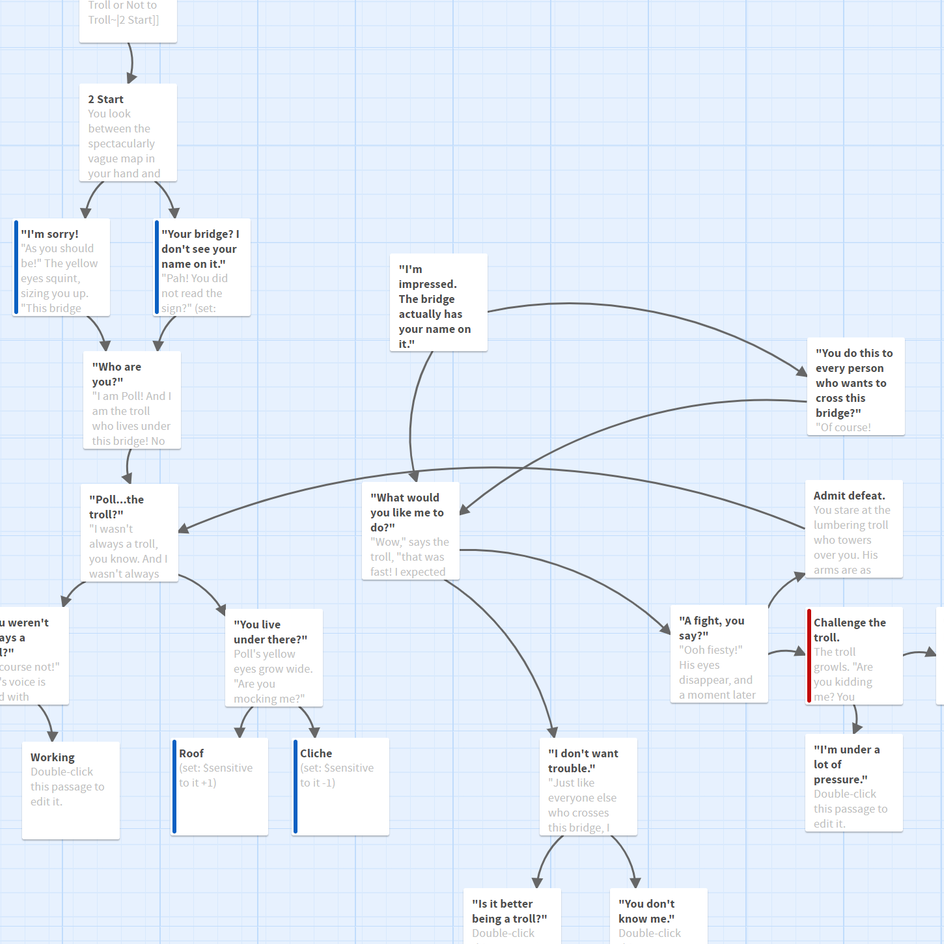
So I started in Twine. Simple, fast, and responsive enough to keep pace with the early rush of ideas. I used it to map core plot beats, establish tone, test the pacing of decision points, and understand what "meaningful branching" actually felt like in practice. A choice is only as good as the weight behind it.
Only once the story had its footing did I move into the editor, and that's where the systems work began.
THE CRAFT
Mobile real estate is unforgiving. Player choices had to live in buttons limited to <40 characters, which meant every line of microcopy was pulling triple duty:
it needed to feel like the character speaking
it needed to be understood in under two seconds
it needed to be narratively compelling
My solution was to write detailed lead-ins that gave players enough context to choose confidently, while keeping the choice text itself in first person—player as character. The tap never broke the story.

Momentum was the other problem to solve. Players needed to feel like they were moving through the episode, through the world, through the story. Inspired by the game tutorials I wrote in my studio days, I embedded visible narrative goals at the start of each episode ("Discover Mary's secret!") and after key event moments so players always knew what they were working toward. I used visually distinct iconography and tutorial UI components to reinforce that progress was being made.

THE ITERATION
Live player data told us things prototyping couldn't. When metrics showed falloff at stretches longer than roughly fifteen taps without a choice, I introduced what I called "flavour choices": low-stakes responses that restored a sense of agency without touching the main storyline. Players didn't need every choice to matter enormously. They just needed to feel present.
Reward loops needed rethinking, too. Players were spending their in-story currency faster than expected, burning through it before the big moments I'd designed it for. I went back into each episode and added smaller, more frequent opportunities to spend for the benefit of unlocking backstory, world lore, or a memorable (and sometimes racey!) character beat. The big choices still felt special. Now the journey to them did, too.

THE IMPACT
Episode one landed a 65–70% player retention rate, with a roughly 70% click-through rate within the first fifty taps, just where FableLabs wanted it. But the numbers only tell part of the story:
"I just read the 3rd chapter. It has peaked my interest because of so many choices!" —kleine2022
"Eeeeeeeek … this is getting more and more exciting! Starting ep 6 now. I'm totally hooked!!" —victoriamasina
"The secrets are the best part right? I want a SCANDAL or nothing!" —brooke
"I am definitely hooked after reading this chapter! Can't wait to see what other royal secrets will be uncovered!" —yvonneparis
Players weren't just completing episodes. They were invested in the characters, the secrets, the world.
Internally, the project was showcased to the large writer’s pool as a lead for the historical drama genre of the FableLabs platform. Narrative goals became tutorials for other contract writers in the community for its positive player reception and effectiveness.
“Save the Queen” holds a special place in my storytelling career: a defining moment of knowing that compelling stories can exist when married with systems thinking.